
Long-Haul Freight, Moved More Efficiently
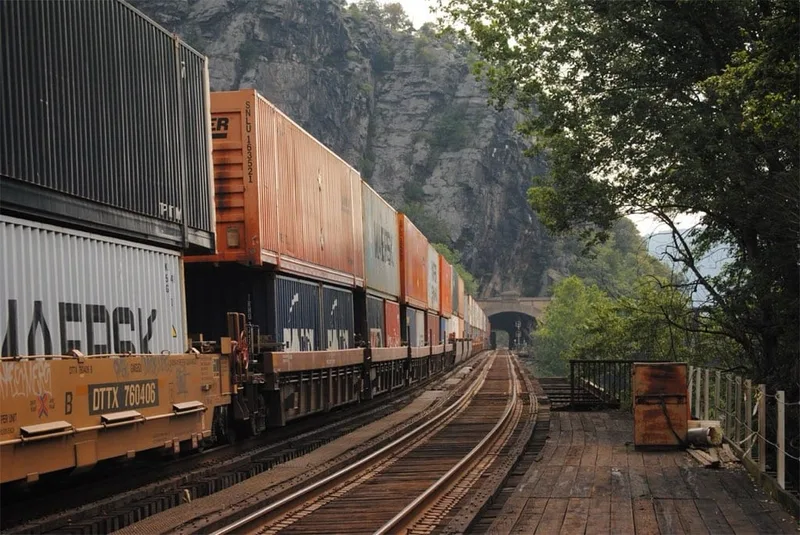
Intermodal rail shipping moves your freight in a container or trailer that travels by truck to a rail ramp, rides the rail network for the long-haul portion of the trip, and is delivered by truck at the other end. The freight itself stays in the same container the whole way.
For shipments traveling 500 miles or more, intermodal often delivers significant cost savings compared with over-the-road truckload, while reducing your carbon footprint. Logistics-Now manages the complete intermodal process — drayage, rail coordination, and final-mile delivery — and our relationships with major Class I railroads support competitive pricing and reliable transit across key corridors.
Intermodal works best for freight that can be planned ahead. For shorter or more time-sensitive moves, full truckload shipping is usually the better fit.
What Our Intermodal Services Include
We coordinate every leg so you have one partner for the whole move.
Origin Drayage
Truck pickup at your facility and delivery of the loaded container to the rail ramp.
Rail Coordination
Booking and coordination of the long-haul rail move with major Class I railroads.
Destination Drayage & Final Mile
Pickup from the destination ramp and delivery to your customer or facility.
Lane & Mode Analysis
A comparison of intermodal and truckload on your lanes so you know where rail makes sense.
Shipment Visibility
Updates as your freight moves between truck and rail.
Benefits of Intermodal Rail
Lower Long-Haul Costs
On lanes of 500+ miles, intermodal often costs significantly less than over-the-road truckload.
Smaller Carbon Footprint
Moving the long-haul portion by rail reduces transportation emissions.
Door-to-Door Service
Truck drayage at both ends means you do not need rail access at your facility.
Another Capacity Option
Rail gives you an alternative to relying on highway capacity alone.
Who Intermodal Rail Is For
Intermodal is a strong fit for shippers with:
- Long-haul lanes of 500 miles or more
- Freight that can be planned rather than rushed
- Consistent, recurring volume on the same lanes
- Full container or trailer loads of palletized or floor-loaded goods
- Sustainability goals for their supply chain
- Truckload spend they want to reduce on longer lanes
Intermodal vs. Over-the-Road Truckload
Both have their place. Here is how they generally compare on a long-haul lane.
| Intermodal Rail | Over-the-Road Truckload | |
|---|---|---|
| Best distance | Long-haul lanes, typically 500+ miles | Any distance, especially short and regional lanes |
| Cost on long haul | Often significantly lower | Typically higher |
| Transit time | Usually longer, due to ramp and rail schedules | Usually faster, moving directly door to door |
| Carbon footprint | Lower | Higher |
| Best for | Planned, recurring, non-urgent freight | Time-sensitive or short-haul freight |
How Our Intermodal Process Works
Review Your Lanes
Share your origins, destinations, volumes, and timelines.
Compare Modes
We compare intermodal and truckload so you can see where rail fits.
Book & Dray to the Ramp
Your freight is picked up and drayed to the origin rail ramp.
Rail Linehaul
The container moves by rail over the long-haul portion of the lane.
Final-Mile Delivery
Destination drayage delivers your freight to its final stop.
Why Choose Logistics-Now for Intermodal
Choosing the right mode is one of the biggest levers in your freight spend. We help you connect the right mode and route to meet your cost and service expectations — and manage every leg when intermodal is the answer.
- Complete management of drayage, rail, and final mile
- Relationships with major Class I railroads
- Honest comparisons between intermodal and truckload
- Powered by MODE Transportation
- One partner across rail, road, and more
“If you can't measure it, you can't manage it”

Intermodal Rail FAQs
What is intermodal rail shipping?
Intermodal shipping moves freight in a container or trailer using more than one mode — typically truck to a rail ramp, rail for the long-haul portion, and truck again for final delivery — without handling the freight itself between modes.
When does intermodal make sense?
Intermodal is usually most cost-effective on lanes of 500 miles or more for freight that can be planned ahead. We can compare intermodal and truckload on your specific lanes.
Is intermodal slower than truckload?
Intermodal transit is usually somewhat longer than over-the-road truckload because of rail schedules and ramp handling. That is why it is best for freight that is not extremely time-sensitive.
Who handles drayage and final-mile delivery?
We do. Logistics-Now manages the complete intermodal process, including drayage to and from the rail ramps, rail coordination, and final-mile delivery.